If you already have horses, goats, sheep, or other livestock on your property, you may wonder whether a Mini Highland cow can comfortably join them. In many situations, owners can keep Mini Highland cows alongside other livestock. However, successful mixed-animal management requires more than simply putting different species in the same pasture.
Space, temperament, fencing, feeding, water access, shelter, pasture conditions, and individual animal behavior all deserve attention.
If you are still deciding whether a Mini Highland fits your property, our Mini Highland Cattle Buyer’s Guide can help you understand what to consider before purchasing.
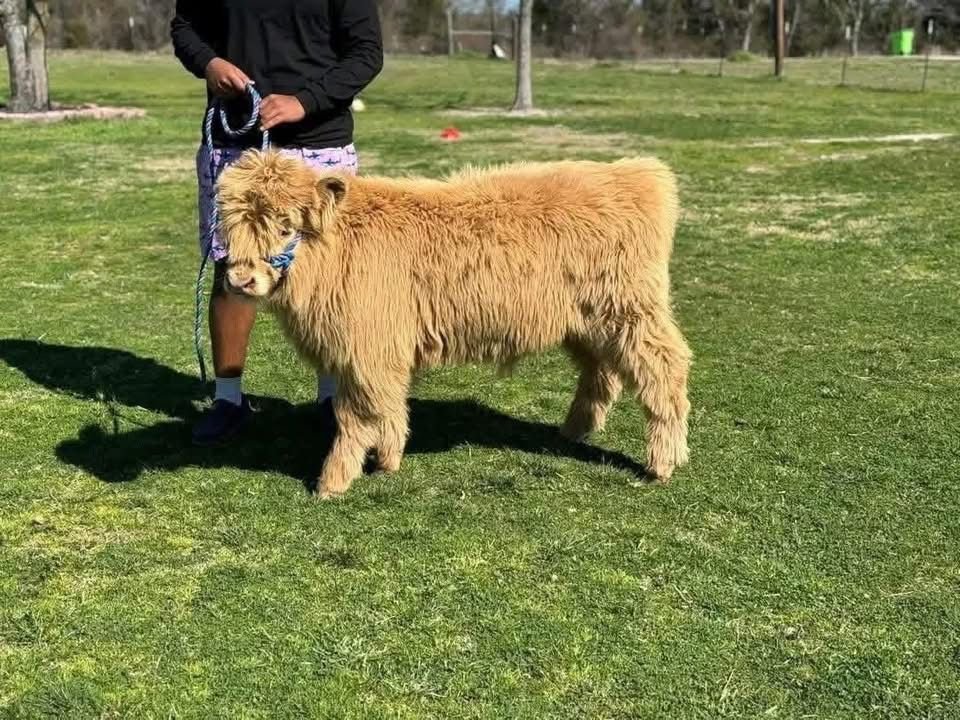
Can Mini Highland Cows Live With Other Livestock?
Yes, Mini Highland cows can potentially live alongside other livestock when the animals and property are properly managed.
Mixed-species grazing is already used in livestock production. Cattle and goats, for example, can use pasture differently because their grazing preferences are not identical.
Oklahoma State University Extension — Mixed-Species Grazing: https://extension.okstate.edu/fact-sheets/mixed-species-grazing-a-potential-opportunity-to-improve-rangeland-productivity-and-increase-profits.html
However, compatibility should always be evaluated on an individual basis.
A calm Mini Highland may settle easily into a mixed-animal environment, while another animal may be territorial, nervous, overly playful, or difficult to manage around unfamiliar livestock.
The goal is not simply to keep multiple species together.
The goal is to create a safe environment where every animal has enough space, food, water, shelter, and room to move away from others when necessary.
Can Mini Highland Cows Live With Horses?
Yes, many owners can keep Mini Highland cows with other livestock when they manage the animals and property carefully.
Mixed-species grazing can work well on some farms because different animals often use pasture in different ways. Cattle generally prefer grasses, while goats tend to browse shrubs, weeds, and other vegetation.
Oklahoma State University Extension — Mixed-Species Grazing: https://extension.okstate.edu/fact-sheets/mixed-species-grazing-a-potential-opportunity-to-improve-rangeland-productivity-and-increase-profits.html
Even so, compatibility depends on the individual animals.
A calm Mini Highland may adjust quickly to a mixed-animal environment. Another animal might act territorial, nervous, overly playful, or difficult to manage around unfamiliar livestock.
The goal involves more than keeping several species together. You want every animal to have enough space, food, water, shelter, and room to move away from the others.
Can Mini Highland Cows Live With Goats?
Goats and cattle can be a practical combination on some farms.
One reason is that cattle and goats often use vegetation differently. Goats tend to browse more woody plants and shrubs, while cattle generally rely more heavily on grasses.
Oklahoma State University Extension — Mixed-Species Grazing: https://extension.okstate.edu/fact-sheets/mixed-species-grazing-a-potential-opportunity-to-improve-rangeland-productivity-and-increase-profits.html
However, goats can create a fencing challenge.
A fence that easily contains cattle may not be enough to contain goats.
For that reason, mixed cattle-and-goat properties should be designed around the needs of the species that are most difficult to contain.
The University of Minnesota Extension also notes that producers incorporating sheep or goats need to consider additional fencing and parasite-management requirements.
University of Minnesota Extension — Multi-Species Grazing: https://extension.umn.edu/agriculture/animals-and-livestock/livestock-operations/multi-species-grazing
What About Mini Highland Cows and Other Cattle?
Mini Highland cattle can potentially live with other cattle when the animals are compatible and the group is managed properly.
In fact, keeping cattle with other cattle can sometimes be simpler than mixing several different species because their basic grazing and management needs are more similar.
Even so, size differences should be considered.
If a much larger animal is placed with a significantly smaller Mini Highland, monitor interactions around:
• Feed
• Water
• Gates
• Shelters
• Mineral stations
• Narrow passageways
An animal that is constantly pushed away from resources may need to be separated.
The objective is to make sure every animal has reasonable access to what it needs.
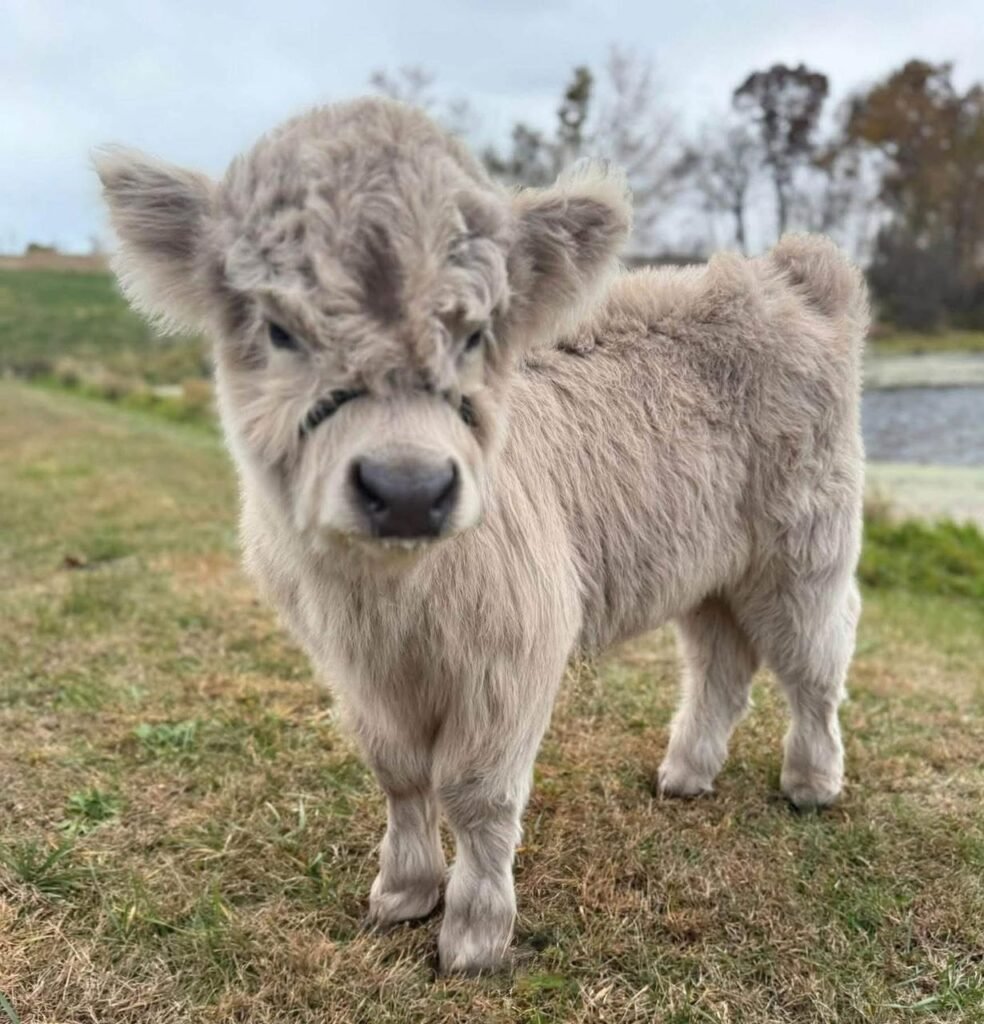
Can Mini Highland Cows Live With Sheep?
Sheep and cattle can be managed together in some grazing systems.
However, combining species means you also need to understand differences in nutrition, fencing, parasite management, and mineral requirements.
This is particularly important with sheep because certain minerals that are appropriate for cattle can be unsafe for sheep.
University of Minnesota Extension — Multi-Species Grazing: https://extension.umn.edu/agriculture/animals-and-livestock/livestock-operations/multi-species-grazing
If you are planning a cattle-and-sheep system, discuss the mineral and health-management program with your veterinarian or livestock professional.
Never assume that a mineral supplement designed for one species is automatically appropriate for another.
What About Pigs and Other Farm Animals?
Mini Highland cows may share a property with other farm animals without necessarily sharing the exact same enclosure.
This is often an important distinction.
You do not have to put every animal into one pasture.
For example, you might have:
• Mini Highlands in one paddock
• Horses in another
• Goats in a separate fenced area
• Poultry in a protected area
• Smaller animals with their own housing
Strategic separation can make livestock management easier.
It also gives you more control when one animal becomes sick, requires special feeding, needs treatment, or needs temporary isolation.
Does Temperament Matter When Mixing Livestock?
Absolutely.
Temperament can be just as important as species.
A calm, well-handled Mini Highland may be comfortable around people and other animals, while an unfamiliar or nervous animal may need more time to adjust.
When evaluating a Mini Highland for a mixed-animal property, ask the breeder about its behavior.
Questions worth asking include:
• Is the animal accustomed to regular care and handling?
• How does it respond to people?
• Has it been around other cattle?
• Has it been exposed to horses or other livestock?
• Does it remain calm during routine handling?
• How does it behave during feeding?
This is one reason buyers should evaluate the individual animal rather than relying only on its breed or size.
For more information about behavior, Mini Highland Cow Temperament is a helpful resource for prospective owners.
How Much Space Do Mixed Livestock Need?
No single acreage figure works for every mixed-livestock property.
Pasture requirements depend on the number and type of animals, forage production, soil quality, rainfall, season, and management practices.
Before adding a Mini Highland, consider:
- Number of animals
- Available pasture
- Forage quality
- Supplemental hay requirements
- Water availability
- Shelter
- Fencing
- Seasonal pasture conditions
A smaller property with productive pasture may support livestock differently from a larger property with poor forage. Supplemental hay can also change how heavily animals depend on pasture.
Horse owners should consider pasture productivity and management when determining available grazing space.
University of Minnesota Extension — Managing Established Horse Pastures: https://extension.umn.edu/agriculture/animals-and-livestock/horse/managing-established-horse-pastures
Rather than focusing only on acreage, evaluate the entire property. Make sure your animals have enough room to move, graze, drink, rest, and separate from one another.
For more preparation advice, visit How to Prepare Your Property for a Mini Highland Cow.
Can Different Livestock Share the Same Feed Area?
This depends on the animals and the type of feed.
One of the biggest challenges with mixed livestock is that different species can have different nutritional requirements.
A feed or mineral supplement intended for cattle should not automatically be offered to sheep or goats.
Feeding arrangements should also prevent dominant animals from controlling access to food.
If necessary, use separate feeding areas so that each species receives the appropriate nutrition.
This is especially important when one animal requires medication, special feed, or a diet that differs from the rest of the group.
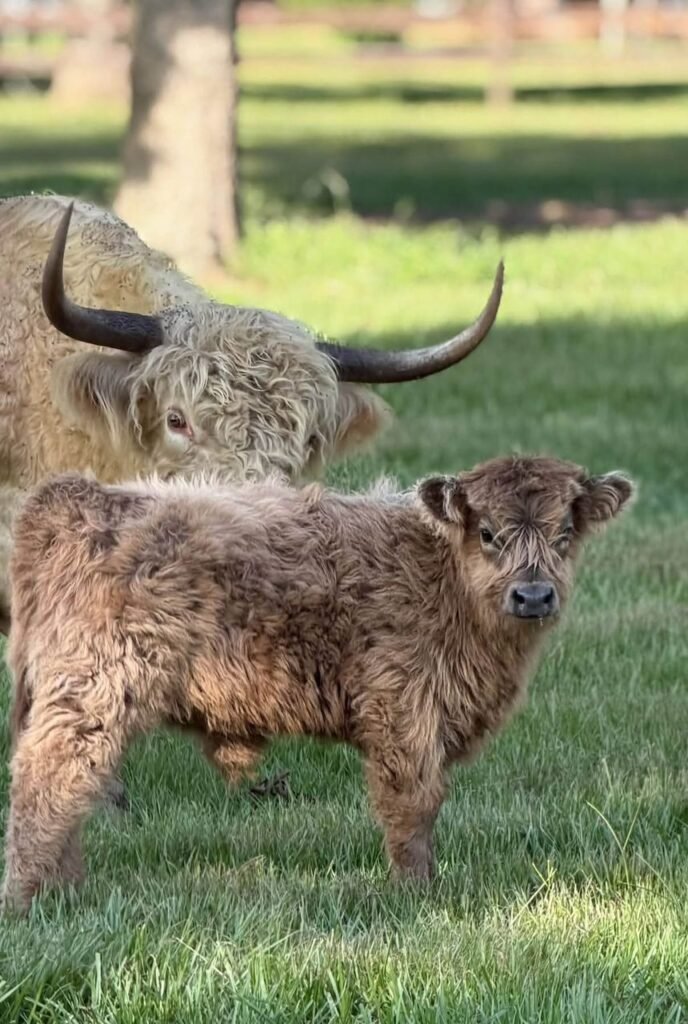
. Should Different Livestock Share the Same Water?
Animals need reliable access to clean water.
When several species share a pasture, make sure the water system can accommodate the entire group without excessive crowding.
Multiple water points can sometimes help reduce competition.
Water locations should also be accessible and maintained regularly.
A good pasture-management system should account for fencing, water, forage, and animal movement rather than treating them as separate issues.
Penn State Extension — Fencing: https://extension.psu.edu/fencing
What Kind of Fencing Do You Need?
The fence needs to contain the animals you own while minimizing injury risks.
This becomes more complicated when different species have different behaviors.
For example, goats may challenge fencing in ways that cattle do not, while horses have their own fencing-safety considerations.
Penn State Extension explains that fencing can be used to control livestock movement and manage pasture access.
Penn State Extension — Fencing: https://extension.psu.edu/fencing
Before buying a Mini Highland for a mixed-animal property, inspect your existing fencing.
Look for:
• Broken boards
• Loose wires
• Sharp edges
• Large gaps
• Weak gates
• Low areas where animals can escape
• Areas where smaller animals could become trapped
Good fencing makes daily livestock management considerably easier.
How Should You Introduce a Mini Highland to Other Animals?
Avoid rushing the introduction.
A gradual introduction can give animals time to see and smell one another before direct contact.
A practical approach may involve:
Step 1: Place the new animal in a secure area where it can settle.
Step 2: Allow the existing animals to observe it from a safe distance.
Step 3: Monitor reactions without forcing contact.
Step 4: If the animals remain calm, allow controlled interaction.
Step 5: Continue monitoring after they are introduced.
Always have a way to separate animals if problems develop.
This is particularly important during the first few days because excitement, unfamiliarity, competition, and territorial behavior can change how animals interact.
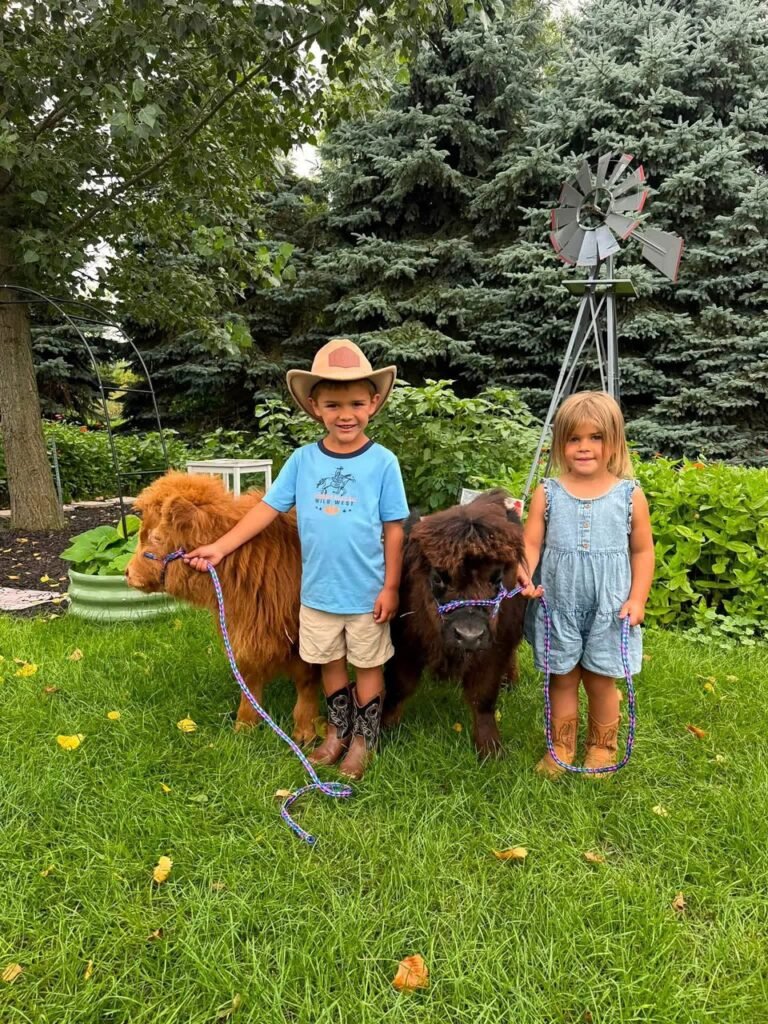
When Should Livestock Be Separated?
Even animals that normally live peacefully together may need temporary separation.
Separate animals when there is:
• Serious aggression
• Repeated chasing
• Injury
• Competition preventing access to food or water
• Illness
• Special nutritional requirements
• Breeding management
• A significant size or age difference creating a safety concern
Separate housing does not mean your animals cannot live on the same farm.
It simply gives you another management option.
Having multiple paddocks can actually make livestock ownership easier because you can adjust the environment when circumstances change.
Can Mini Highland Cows Live With Family Pets?
This requires extra caution.
Dogs, especially unfamiliar or high-energy dogs, can behave differently around cattle than they do around people.
Cattle may also react defensively if they feel threatened.
Never assume that because a Mini Highland is calm around people, it will automatically be comfortable with every dog.
Likewise, don’t allow children to enter a livestock enclosure without appropriate adult supervision.
Mini Highland cattle may be smaller than traditional Highland cattle, but they are still strong livestock animals.
For families considering their first animal, Are Mini Highland Cows Good for Beginners? provides additional information.
What Should You Consider Before Bringing a Mini Highland Home?
Before purchasing, walk through your property and evaluate the entire setup.
Think about where your cattle will eat, drink, rest, move, and interact with existing animals.
Use this checklist:
- Is the fencing secure?
- Do you have enough usable pasture?
- Can your animals reach clean water easily?
- Do you have suitable shelter?
- Can you separate animals when necessary?
- Are the feeding areas appropriate?
- Can you safely handle the cattle?
- Is there suitable access for livestock transportation?
- Do you have a plan for veterinary care?
- Will your existing animals have time to adjust?
Good preparation can make the transition much smoother.
Having a separate paddock can prove especially useful during introductions or whenever you need to isolate an animal temporarily.
For everyday ownership information, visit Mini Highland Cattle Care Guide.
Choosing a Mini Highland for a Mixed-Animal Farm
If your property already has horses, goats, sheep, or other livestock, tell the breeder.
Your living arrangement is useful information when discussing which animal may fit your situation.
At Willow Creek Mini Highlands, available cattle can vary by age, sex, color, temperament, and development.
When you contact us, let us know what your property is like and what other animals you have.
We can discuss available Mini Highlands and help you understand the characteristics of the animals currently available.
View Mini Highland Cattle for Sale to see available cattle.
If you have questions about a particular animal, Contact Willow Creek Mini Highlands to discuss availability, your property, and delivery options.
Final Thoughts: Can Mini Highland Cows Live With Horses, Goats, or Other Livestock?
Mini Highland cows can become a valuable part of a mixed-animal farm when owners plan carefully.
Compatibility depends on more than breed or size. Temperament, space, fencing, feeding, water, shelter, health management, and gradual introductions all play important roles.
Horses, goats, sheep, cattle, and other animals have different needs. Build your management system around those differences instead of expecting every species to function in exactly the same way.
Before bringing a Mini Highland home, prepare your pasture, fencing, water sources, feeding areas, shelter, and separation spaces.
Then take time to introduce your new animal carefully.
If you are ready to start looking for your own Mini Highland, Browse Mini Highland Cattle for Sale at Willow Creek Mini Highlands to explore available cattle.
You can also Contact Willow Creek Mini Highlands if you have questions about available animals, pairs, property requirements, or delivery.
The right preparation can help you create a safe and comfortable environment where your Mini Highland and other livestock can thrive.
[…] Can You Keep Two Mini Highland Cows Together? […]